Elena Beck · 12 September 2026
How Environmental Shifts Influence the Structural Integrity of Historic Coastal Infrastructure Over Decades
Environmental shifts including rising sea levels, intensified storm patterns, and changing temperature regimes have altered the structural integrity of historic coastal infrastructure across multiple continents over the past several decades, and researchers continue to document these effects through long-term monitoring programs. Data from various agencies show that mean sea levels have increased at rates exceeding three millimeters per year in many regions since the mid-twentieth century, which places constant pressure on foundations built originally for different shoreline positions.
Sea Level Rise and Foundation Stability
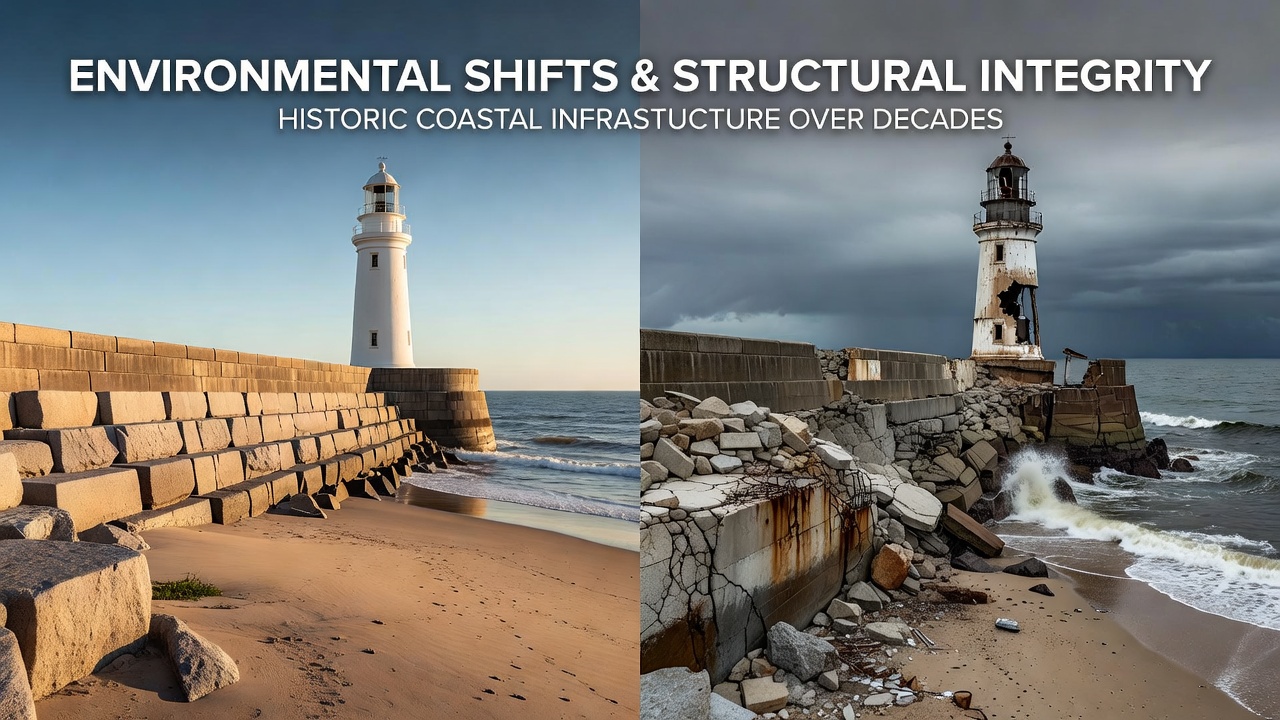
Historic structures such as lighthouses, breakwaters, and harbor walls experience progressive undermining when water tables rise and wave action reaches higher elevations than engineers anticipated during original construction. According to records compiled by the National Oceanic and Atmospheric Administration, global mean sea level rose approximately twenty centimeters between 1900 and 2020, and this trend has accelerated in recent measurement periods. Saltwater intrusion accelerates corrosion of embedded steel reinforcement in concrete elements while also degrading mortar joints in masonry walls through repeated wetting and drying cycles. Observers note that many nineteenth-century fortifications along the Atlantic seaboard now stand closer to active surf zones than their designers intended, which increases both horizontal loading and vertical scour around footings.
Storm Intensity and Material Fatigue
Intensified storm events compound these gradual changes by delivering repeated high-energy impacts that exploit existing micro-fractures in stone and timber. Researchers tracking hurricane frequency and intensity in the North Atlantic basin report that the proportion of storms reaching major hurricane status has risen measurably since the 1980s, and each such event deposits additional sediment loads or removes protective beach buffers. Data indicates that wave forces during extreme events can exceed design loads by factors of two or three, which leads to cumulative fatigue in older ironwork and wooden pilings. In regions where freeze-thaw cycles still occur, the combination of saltwater saturation and sub-zero temperatures produces expansive pressures within pores and cracks that further reduce load-bearing capacity over successive winters.
Regional Case Examples and Monitoring Efforts
One study of a seventeenth-century harbor wall in northern Europe revealed measurable tilting and settlement after successive storm seasons between 2010 and 2022, while similar structures along the Australian coastline have shown accelerated surface spalling linked to increased marine aerosol deposition. The European Environment Agency has published datasets illustrating how changing wind patterns and wave climates interact with local geology to produce differential erosion rates along protected heritage sites. These findings emerge from repeated photogrammetric surveys and embedded sensor networks that record micro-movements in real time, allowing engineers to correlate specific environmental episodes with structural responses. As monitoring continues into September 2026, updated datasets are expected to refine predictive models that currently rely on historical averages.
Material Degradation Mechanisms Over Time
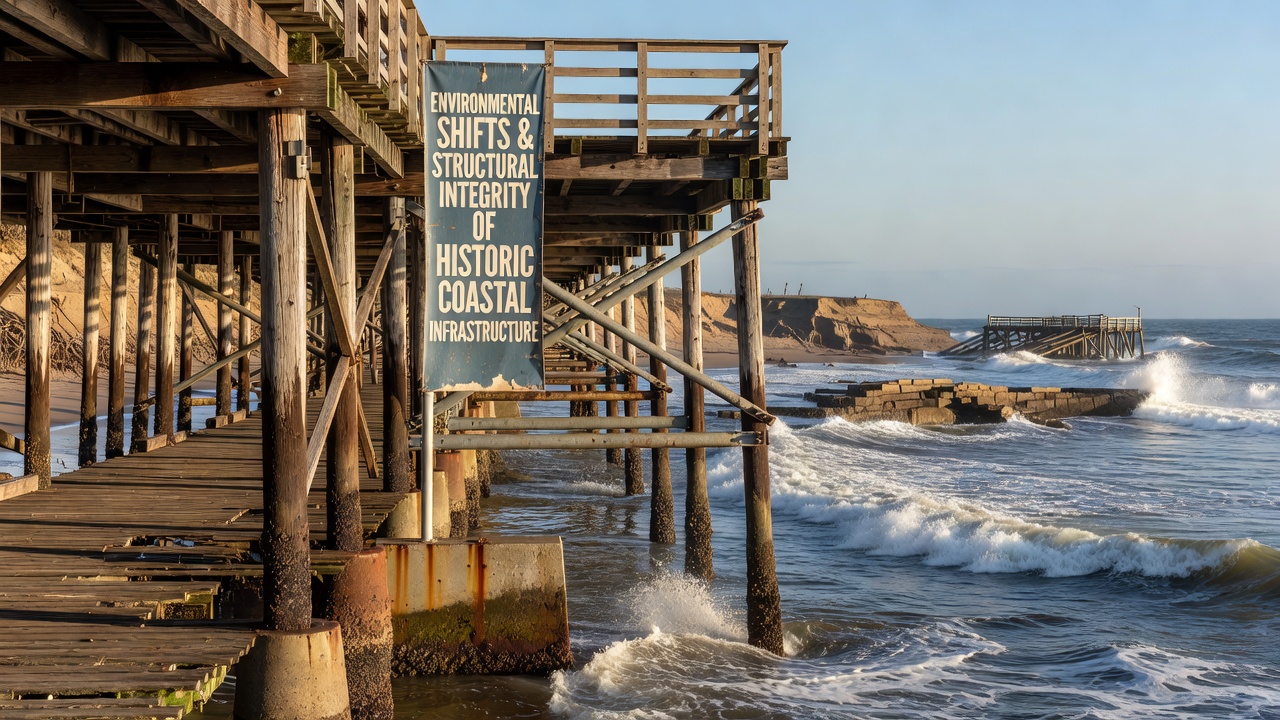
Stone surfaces in constant contact with saline water undergo both chemical dissolution and physical crystallization of salts within pores, and these processes operate continuously rather than episodically. Timber elements suffer from fungal decay and marine borer activity that intensify when water temperatures remain elevated for longer portions of each year. Concrete mixes from earlier eras often lack the low water-cement ratios and supplementary cementitious materials used today, which leaves them more susceptible to alkali-silica reactions accelerated by chloride ions. Researchers have documented strength reductions of fifteen to thirty percent in core samples extracted from structures exposed for more than eighty years, and these losses correlate strongly with cumulative exposure duration rather than single catastrophic events.
Long-Term Adaptation and Documentation Practices
Heritage authorities in multiple countries now integrate climate projections into maintenance schedules, and they prioritize non-invasive stabilization techniques that preserve original fabric while addressing immediate vulnerabilities. Photogrammetry, LiDAR scanning, and acoustic monitoring provide quantitative baselines that allow comparison across decades, and these technologies reveal slow deformation trends invisible to visual inspection alone. International collaboration through organizations focused on cultural heritage has produced standardized protocols for recording environmental parameters alongside structural metrics, which facilitates cross-site analysis. Such coordinated efforts help identify thresholds at which intervention becomes necessary to prevent irreversible loss of historic fabric.
Conclusion
Decades of environmental data demonstrate clear linkages between shifting coastal conditions and measurable declines in the structural performance of historic infrastructure, and ongoing measurement programs continue to refine understanding of these interactions. Continued collection of site-specific parameters remains essential for developing effective preservation strategies that respond to both gradual trends and episodic extremes.