Ulrich Keller · 10 October 2026
Tracing the Evolution of Dockside Trade Practices Through Archival Records and Oral Histories
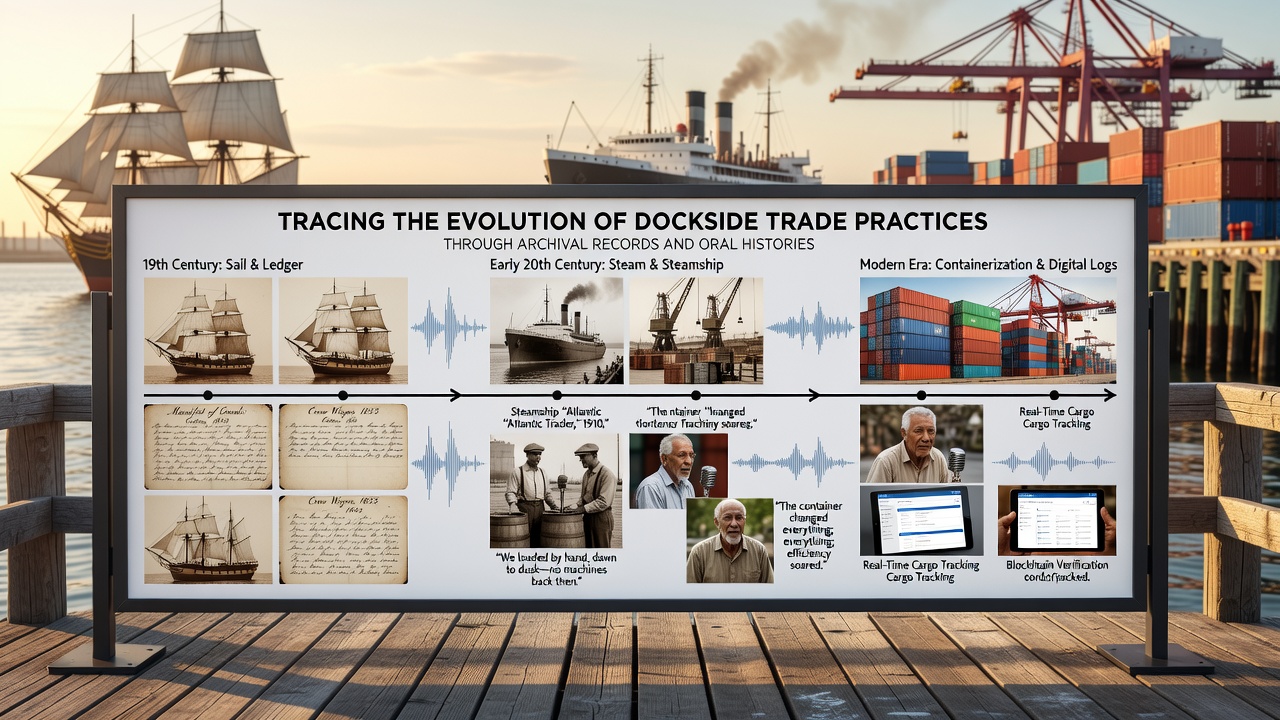
Archival records from port authorities and shipping companies document shifts in dockside trade practices across centuries, while oral histories from longshoremen and their families add personal accounts of daily operations and labor conditions. These combined sources reveal how cargo handling, customs procedures, and worker organization changed from sail-powered vessels to container shipping. Researchers at institutions such as the U.S. National Archives have cataloged manifests, ledgers, and correspondence that track the transition from breakbulk methods to standardized containers beginning in the 1950s.
Early Practices Documented in Port Ledgers
Colonial-era customs books and wharfage receipts show that dockside activities centered on manual loading with ropes, pulleys, and human labor, often coordinated through guild rules that assigned specific tasks to different trades. In ports along the Atlantic and Indian Ocean routes, records indicate that goods such as timber, spices, and textiles moved through open wharves where tidal schedules dictated work hours. Oral histories collected in the mid-20th century from descendants of 18th-century dockworkers describe how families passed knowledge of safe knot-tying and cargo securing techniques across generations, details absent from formal ledgers yet confirmed by surviving rope samples preserved in maritime museums.
Industrial Expansion and Labor Organization
During the 19th century, steamship adoption increased cargo volume and required new infrastructure such as warehouses and rail spurs adjacent to docks. Government reports from Australian and Canadian port commissions detail the introduction of steam cranes and the resulting reduction in manual lifting injuries, though accident logs still list frequent falls and crushing incidents. Oral accounts gathered in the 1970s from retired stevedores in Sydney and Halifax describe the introduction of union hiring halls, where daily shape-ups determined work assignments and wages. These narratives align with payroll records showing the gradual replacement of casual day labor with more structured employment agreements by the 1890s.
Twentieth-Century Shifts Captured in Multiple Sources
World War II accelerated changes as military supply chains demanded faster turnaround times, leading to standardized pallet systems documented in both U.S. Army Corps of Engineers files and British Ministry of War Transport correspondence. Postwar oral histories from workers in Rotterdam and Singapore recount the arrival of early container prototypes in the late 1950s, noting initial resistance from unions concerned about job losses. Data from port statistics compiled by the International Maritime Organization indicate that container throughput grew from fewer than 100,000 units worldwide in 1965 to over 800 million TEUs by 2020, a transformation visible in aerial photographs and cargo-handling manuals preserved in university libraries. In October 2026, several European maritime archives plan to release newly digitized oral history recordings from the 1960s container transition period, allowing researchers to cross-reference spoken memories with previously restricted customs ledgers.
Methodologies for Combining Records and Narratives
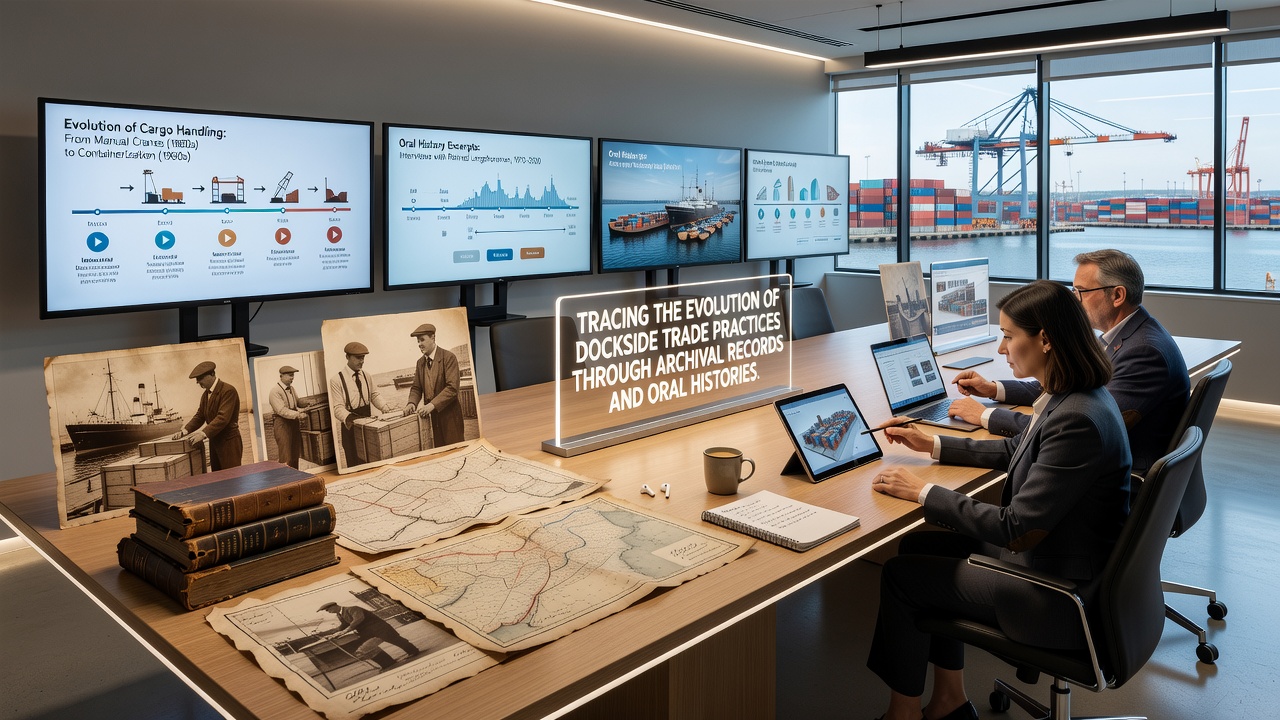
Historians cross-reference quantitative data from tonnage reports and vessel logs with qualitative details from recorded interviews to reconstruct the social dimensions of trade evolution. One project at the University of British Columbia matched 1930s dock injury statistics with stories from waterfront families, revealing seasonal patterns of employment tied to harvest cycles in agricultural export regions. Similar approaches in Japanese port archives have paired company safety manuals with recollections from Kobe dockworkers about the introduction of forklift trucks in the 1960s, illustrating how equipment changed both productivity and injury profiles. These studies rely on triangulation rather than single-source evidence, because oral accounts often supply context missing from bureaucratic paperwork, while records provide chronological anchors for memory-based timelines.
Conclusion
Archival materials and oral histories together map the progression of dockside practices from manual, tide-dependent operations to automated, schedule-driven container systems. Ongoing digitization efforts scheduled through late 2026 continue to expand access to these primary materials, enabling further comparative analysis across regions and eras. The integration of written records with spoken testimony supplies a fuller picture of how technology, labor relations, and global trade flows have reshaped waterfront work over time.